Blog
The traveller's nightmare.
What happens when the unexpected happens - overseas?
Preparing your life to access everywhere
My mate Liam was living the dream. Six months into his backpacking adventure through Southeast Asia, he felt completely untethered, vibrant and alive. He’d just finished a trek through the rice paddies of Vietnam and was celebrating with a well-deserved beer at a bustling street food market in Hanoi. His small backpack, containing his passport, wallet, phone and camera, was tucked securely under his chair. Or so he thought.
One minute he was laughing with newfound friends, the next, a sudden, fleeting brush against his back and a cold dread washed over him. He checked under his chair. The backpack was gone. His heart hammered against his ribs as he scrambled to his feet, frantically scanning the crowd. It was no use.
In the blink of an eye, everything vital – his identity, his money, his connection to the world – had vanished.
Panic began to set in, cold and sharp. No passport meant no legal identity in a foreign land. No credit cards meant no access to funds. His phone, his primary means of communication and navigation, was gone. The carefully budgeted savings, the emergency cash – all gone. The immediate terror of being stranded, helpless and anonymous, was overwhelming. The dream trip had just become a living nightmare.
He managed to borrow a phone from a kind market vendor and call his family back home, his voice choked with despair. They were frantic, of course, but what could they do from thousands of miles away? The logistics of sending money or replacing documents felt impossibly complex, fraught with delays and bureaucracy.
A LIFE line..
Then, a small flicker of hope. He remembered Sarah, his meticulous sister, had badgered him into setting up a “Digital LIFE file” before he left. At the time, he’d scoffed, seeing it as an overly cautious measure. “I’m an adventurer, Sarah, not an accountant!” he’d joked. But she'd insisted, helping him scan his passport, driver’s license, travel insurance policy, bank card numbers (not CVVs, of course), a list of emergency contacts and even digital copies of flight and hotel confirmations into his new Digital LIFE file. She’d also encouraged him to store his original passport and a few key documents in a secure, fireproof and waterproof bag within his main luggage, which, thankfully, was still at his hostel.
Taking a deep breath, Liam managed to get to an internet café. His hands trembled as he typed in the URL for his secure LIFE File. After a moment of anxiety, the familiar interface loaded. There it was, his entire digital lifeline, neatly organised and easily accessible.
The relief was immediate and palpable. First, he found his travel insurance policy number and the emergency contact details for his insurer. A quick call (using the borrowed phone again) allowed him to submit a claim for the stolen items and get advice on how to proceed. Next, he located the scanned copy of his passport. While not an official replacement, having a digital image was invaluable. It served as proof of identity to the local police when he filed his report – a crucial step for any replacement process.
He then found the details for his bank accounts and credit cards. He called his banks (using Skype credit he found saved in the file) to cancel the stolen cards and arrange for emergency funds to be transferred to a local Western Union, using details he pulled directly from his digital file. He had a scanned copy of his international driver's permit, which, while not as critical, was another piece of his identity restored.
Within 24 hours, Liam had gone from utterly helpless to having a clear action plan. He had his police report, had started his insurance claim, cancelled his cards and had a path to get emergency cash. Because of his sister's insistence on creating a digital Life file, he was able to access his vital information instantly and securely (from anywhere in the world) It transformed a potentially trip-ending disaster into a serious but manageable setback.
He visited the nearest embassy with a printed copy of his scanned passport and the police report, significantly speeding up the process of getting an emergency travel document. He felt immense gratitude for his sister's foresight and his own grudging compliance.
Alongside the digital LIFE File, Sarah had created a physical LIFE file - a sturdy, well-organised binder containing hard copies of his most critical documents: his original will, property deeds, birth and marriage certificates and copies of his insurance policies. The originals, particularly precious ones, were placed in a secure, fireproof and waterproof box kept in a home safe. When Liam got back from his trip, he made a point of regularly reviewing and updating both the digital and physical files, ensuring everything was current.
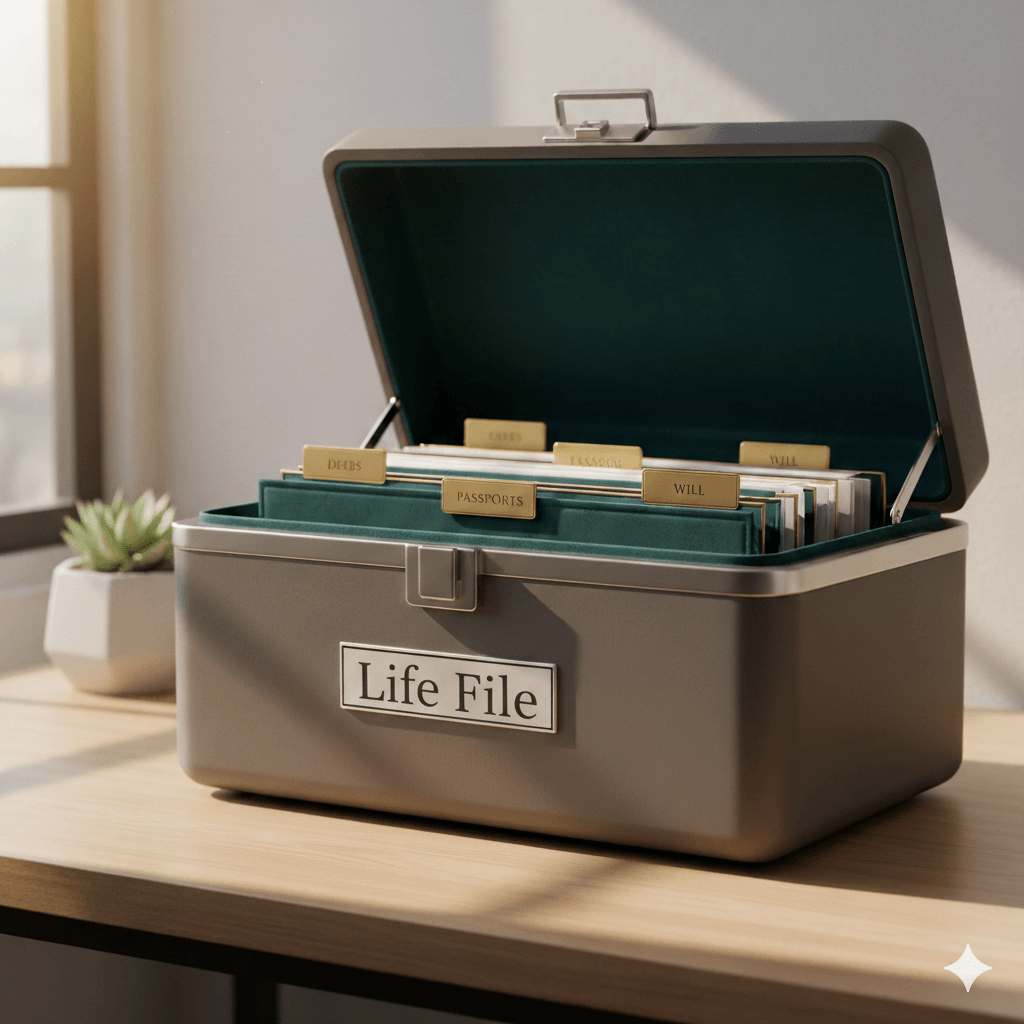
An organised life, accessible support
Liam’s story is a powerful testament to the liberating security offered by a digital LIFE file.
For travellers, digital nomads, or anyone living an active, on-the-go lifestyle, the risk of losing vital documents is ever-present. A physical file is impractical and a single point of failure - like his stolen bag. A secure, cloud-based digital LIFE file, backed up with a physical file of original documents kept securely at home or in an uncompromised location, offers unparalleled peace of mind.
It transforms vulnerability into resilience, ensuring even when the unexpected happens, you can quickly regain control and continue your journey, literally and figuratively. Liam finished his trip, a little wiser and forever grateful for his digital lifeline.
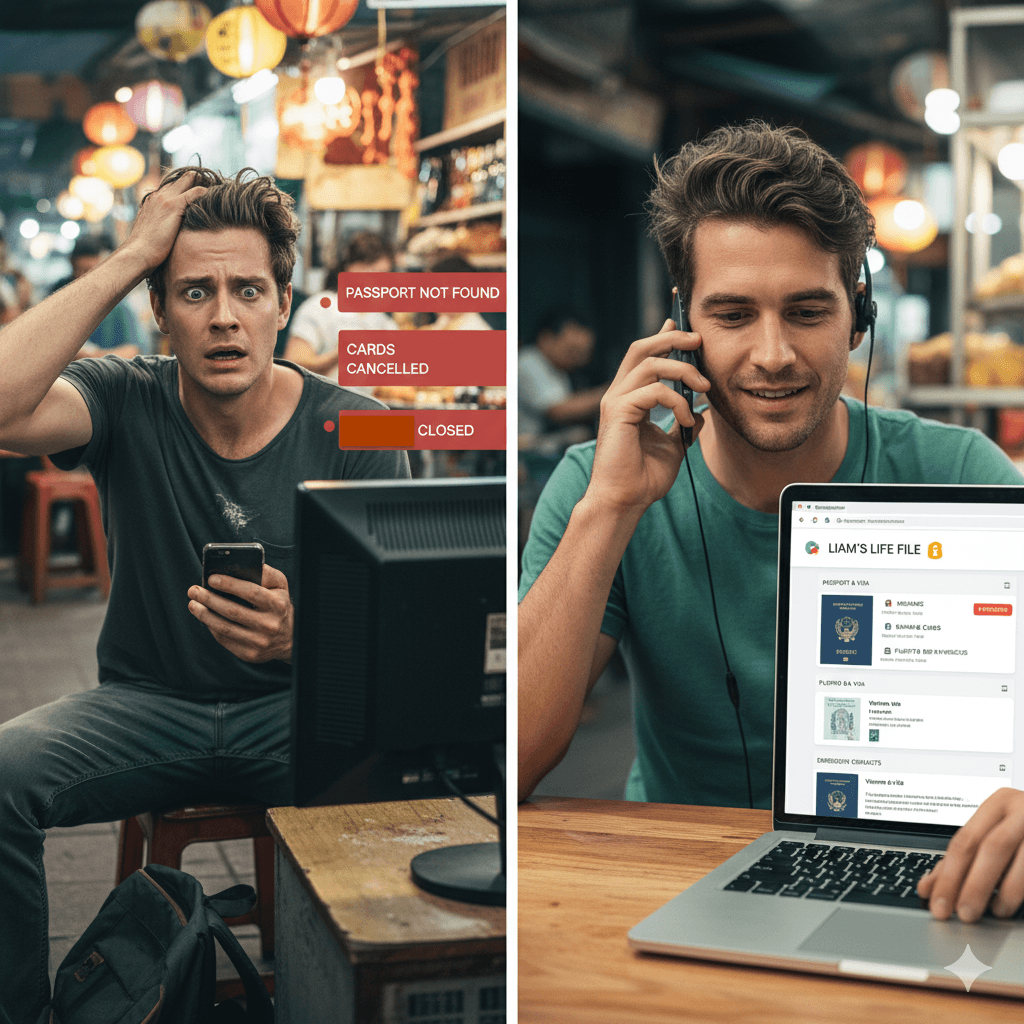
An organised Life - helping you find all your stuff easier
Transform vulnerability into resilience, ensuring that even when the unexpected happens, you can quickly regain control and continue your journey, literally and figuratively.

Gary
Gary is a life-long learner and avid neuroscience nerd. He works as a coach to organisations, groups, and individuals. He supports mental health training and care. A strategic thinker with an operational career - he knows how to structure and organise an intentional life. After losing family members and friends - he understands not just the pain of losing a loved one, but the pain of an unorganised legacy.
Follow me