
Blog
When grief meets chaos and disarray
I'll get to it ... one day...
Just start - one page at a time..
The phone call came in the dead of night, the kind that instantly chills you to the bone. Sarah’s older brother, Mark, had passed away in his sleep, a sudden and unexpected departure that ripped through their family like a jagged tear. Mark was only 58, vibrant and full of life and the idea of him being gone felt impossibly cruel. As the initial shock gave way to a wave of numbing grief, a different kind of challenge began to emerge – the awful chaos of dealing with a life cut short.
Mark had always been a private person, a bachelor who lived a simple life in a charming but cluttered cottage. He was a keen amateur photographer and his house was filled with stacks of photo albums, half-finished projects and a general air of creative disorganisation. What Mark's family quickly discovered, however, was that this disorganisation extended far beyond his hobbies.
“Where’s his will?” Mark’s mother, still frail from the news, whispered one afternoon.
Everyone just shook their heads, tears welling up. They had searched Mark’s desk, his filing cabinet (a rusty, overflowing relic), and even under his bed. Nothing.
It was the first of many such questions that would haunt them in the coming weeks.
A scavenger hunt for critical documents
Navigating the aftermath of a loved one’s death is a profound emotional ordeal. But imagine trying to do so while simultaneously playing a high-stakes scavenger hunt for critical documents. This was Mark’s family's reality. There was the bank account they vaguely remembered Mark mentioning, but couldn't locate any statements for. The various insurance policies – life, health, home – were a complete mystery. They needed his birth certificate for the death certificate, his passport for… well, for everything, it seemed. Each phone call to a government agency or financial institution was met with polite but firm requests for documentation they simply didn't possess.
Mark's physical filing (such as it was) was a nightmare. A dusty accordion folder marked “Important stuff” yielded expired a car insurance policy and a gas bill from 2010. His computer, password-protected, offered no clues. The family spent countless hours on hold, voices hoarse from repeating the same story to different representatives, feeling a growing resentment towards the bureaucratic maze they were trapped in.
Every dead end, every polite refusal, felt like another punch to their grieving hearts. The weight of administrative tasks piled up, stealing precious moments that should have been spent remembering Mark, comforting his mother and allowing themselves to grieve and heal.
One particularly frustrating afternoon, after being told for the fifth time they couldn’t access Mark’s pension information without a specific account number they didn’t have, they broke down with tears of frustration.
“Why didn’t he just… write things down?” they asked.
“Just a list! Anything!”

Organise your life and prepare for the inevitable
This is where the concept of a LIFE file becomes not just a convenience, but a profound act of love and foresight. Imagine if Mark had taken the time to compile his essential life information into a comprehensive system.
A digital LIFE file, password-protected and accessible to a trusted family member, would have contained links to all his online accounts, his will, power of attorney documents, insurance policy numbers, property deeds as well as his beloved photography website login.

A physical LIFE file, mirroring the digital structure, would have held hard copies of key documents, perhaps even with instructions on where the originals were stored – maybe in a secure, fire and waterproof box he kept in a safe deposit box.
Instead of days spent sifting through clutter and navigating frustrating phone trees, Mark's family could have accessed his digital LIFE file. A simple search would have revealed his will, with his wishes and appointing an executor. His bank details would have been readily available, allowing for a smooth transition of financial affairs. Insurance claims could have been initiated promptly, alleviating immediate financial stress.
More than just practicalities, a LIFE file offers immense emotional relief. It demonstrates a thoughtful consideration for those left behind, transforming a potential nightmare of disorganisation into a clear path forward. For all of Mark's loving family, his unexpected passing was already devastating. The added burden of administrative chaos amplified their grief and prolonged their distress.
A LIFE file would have allowed them to focus on what truly mattered: mourning their beloved brother and cherishing his memory, unburdened by the relentless demands of a life left in disarray.
Start with a list: Open a spreadsheet or a document and list every online account you can think of.
Choose a tool: Commit to using a secure password manager and start migrating your logins one by one. This will be the foundation of your future Organised LIFE File.
Appoint and inform: Decide who you will trust with your Master Password or the location of your digital and/or physical records and ensure they know where to find the instructions when the time comes.
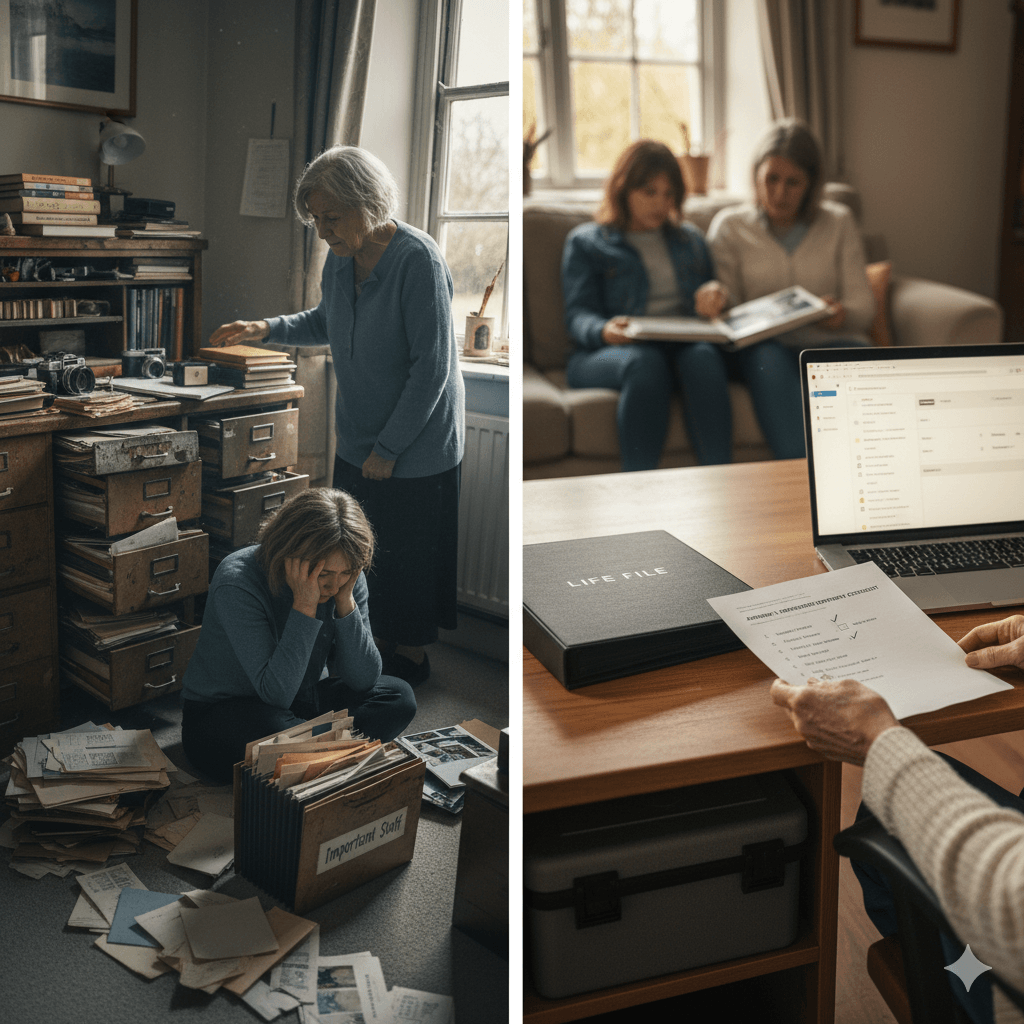
An organised Life - an organised legacy - the LIFE file
It’s a powerful reminder that preparing your life documents isn't just about you; it's a final, enduring gift to your loved ones.

Gary
Gary is a life-long learner and avid neuroscience nerd. He works as a coach to organisations, groups, and individuals. He supports mental health training and care. A strategic thinker with an operational career - he knows how to structure and organise an intentional life. After losing family members and friends - he understands not just the pain of losing a loved one, but the pain of an unorganised legacy.
Follow me