Blog
The scavenger hunt no one wants to play
All that planning - gone in an instant
An organised life - an organised legacy
The smell of smoke still clung to Evelyn’s clothes, a phantom scent that brought tears to her eyes every time she caught a whiff. The fire had started quickly, a faulty electrical wire in the old house and within hours, everything she owned was gone. The house, a cherished family home for three generations, was now a skeletal ruin, a gaping maw of charred timbers and twisted metal.
But it wasn't just the physical loss that weighed heaviest on Evelyn’s heart; it was the chilling realisation of what else had been consumed by the flames.
"I'll get to that one day...."
My Aunty Evelyn was a creature of habit and her habits included meticulous filing of all her paperwork. For years, every important document – her birth and marriage certificates, passport, property deeds, insurance policies, old tax returns, treasured family photos, even her grandmother’s handwritten recipes – had been diligently filed away in an antique oak filing cabinet in her study. It was her sanctuary of certainty, her organised repository of a life well-lived. She'd often thought about digitising some of it, but the task always seemed too daunting, too time-consuming. "I'll get to it one day," she'd tell herself, pushing the thought aside.
Unfortunately, that "one day" never came.
The initial aftermath of the fire was a blur of emergency services, sympathetic neighbours and the dawning horror of utter devastation.
As the smoke cleared, the grim reality set in.
Her filing cabinet, once a symbol of her careful planning, was now a pile of damp, sooty ash. The papers within, even those not directly burned, were unrecognisable, waterlogged and fused together into an unyielding block.
Her entire documented history, her identity, her proof of ownership – all gone.
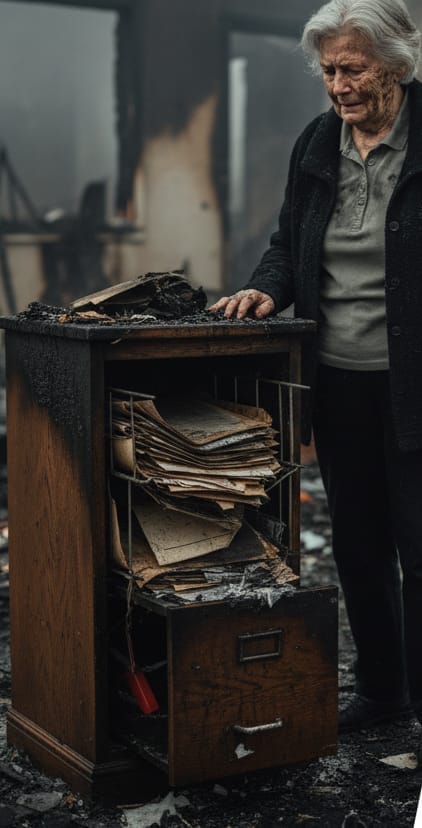
Rebuilding her life wasn't just about finding a new place to live or replacing furniture. Evelyn was facing the painstaking task of recreating her entire documentary existence from scratch. To apply for a new passport, she needed her birth certificate. To get a new birth certificate, she needed other forms of identification, which had also been in the fire. It was a cruel catch-22, a nightmare that felt designed to break her spirit.
Her bank statements, proof of income, even the records of her investments were incinerated. She faced enormous difficulty proving ownership of her land and home, delaying insurance claims and complicating the rebuilding process. Her insurance company, while sympathetic, still required documentation she simply couldn't provide. The entire process of proving who she was, what she owned and what she was entitled to became a full-time job, filled with endless phone calls, bureaucratic hurdles and the constant, gnawing anxiety of being unable to move forward.
“If only,” she’d whisper to herself, staring at the empty space where her filing cabinet once stood.
If only I had scanned them. If only I had backed them up.”
This is where a digital filing system would have been Evelyn's salvation. Imagine if, alongside her physical filing cabinet, she'd kept a digital LIFE file. It would have contained scanned copies of every crucial document: birth certificates, passports, deeds, insurance policies and wills. Each document could have been uploaded and categorised, with secure links and passwords to her online banking, investment accounts and even digital copies of her cherished family photos.
And, what if she had a physical component, a secure, fire/waterproof box? If Evelyn had kept this box in a secure, off-site location or even a robust, home safe, all those vital originals could have been saved.
Alongside the digital LIFE file it's good to also create a physical LIFE file - a sturdy, well-organised binder containing hard copies of the most critical documents: original wills, property deeds, birth and marriage certificates, insurance policies, share certificates etc.
Its important to regularly review and update both digital and physical files, ensuring everything is up-to-date.
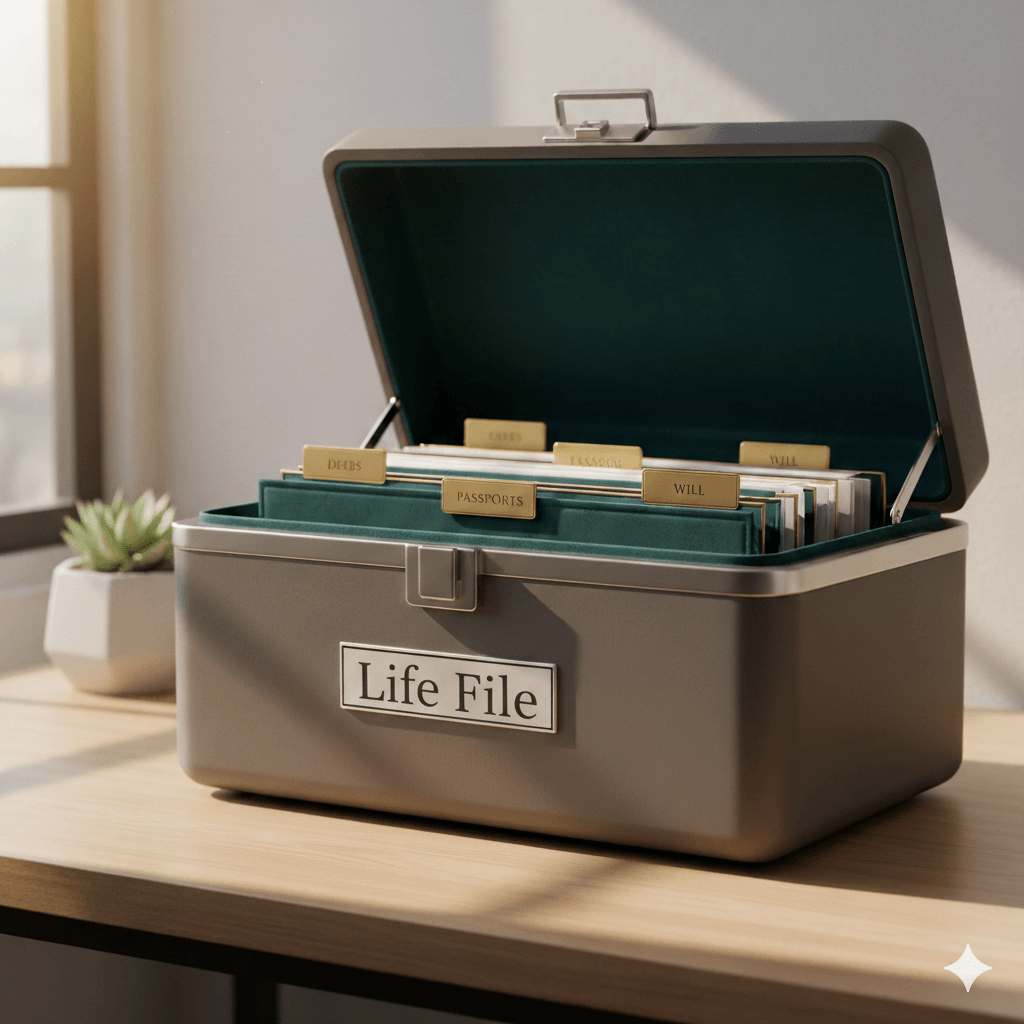
With a digital LIFE file, Evelyn’s journey after the fire would have been dramatically different. Instead of despair, she would have had access. She could have logged into her secure digital LIFE file from a temporary location, accessed her scanned documents and quickly provided them to authorities, banks, and insurance companies. Her proof of identity, ownership, and financial standing would have been immediately available, drastically expediting her claims and the arduous process of rebuilding.
A physical file, even if less robust than the fireproof box, would have provided organised copies, making the digitisation process easier and offering a tangible backup. A LIFE file is not just about organisation; it’s about resilience. It’s about building a robust safety net against life’s unforeseen disasters.
For Aunty Evelyn, the fire took her home, but the loss of her documents threatened to take her future.
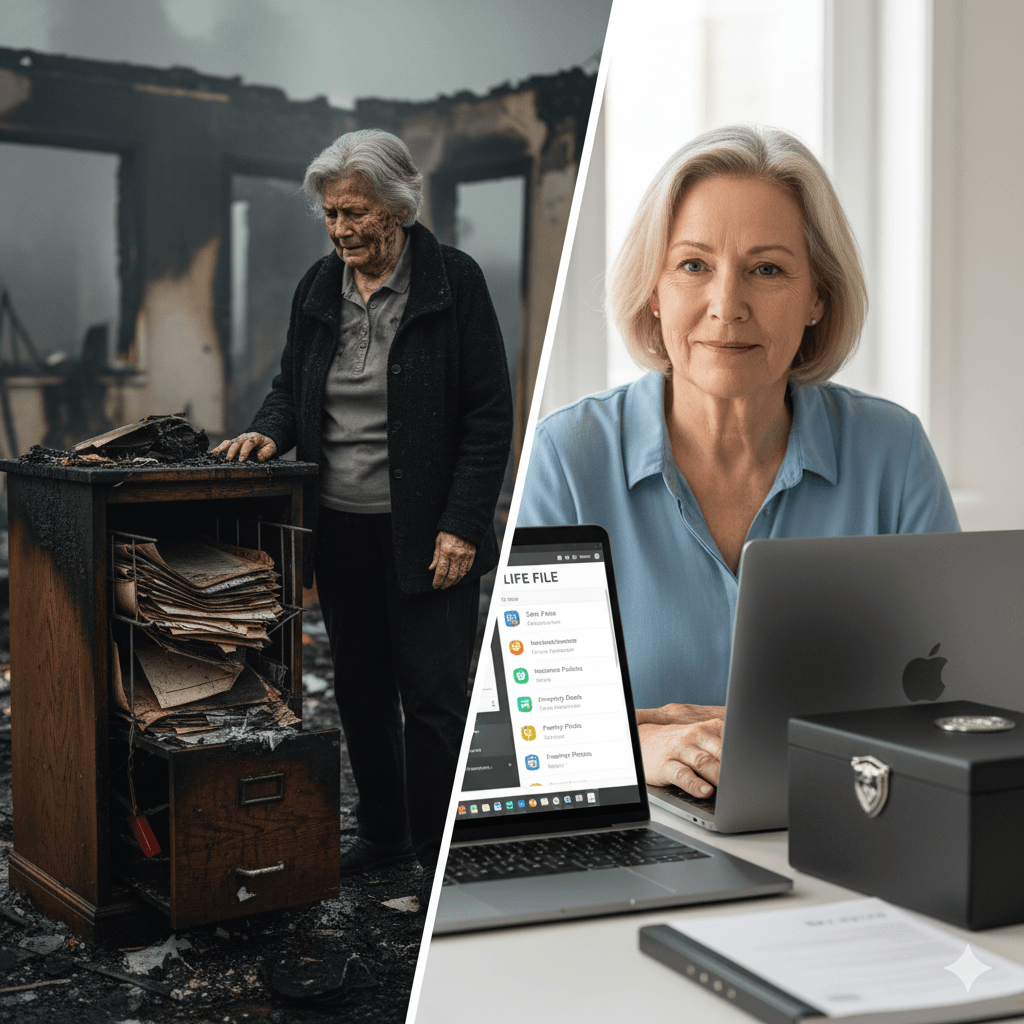
An organised Life - an organised legacy - the LIFE file
A LIFE file would have preserved her past and empowered her to rebuild, turning a catastrophic loss into a manageable challenge. It’s a stark reminder that in an increasingly digital world, securing your vital information digitally is not a luxury, but a necessity.
A well-planned Digital LIFE file is not just an act of kindness for your future beneficiaries—it’s an act of self-care that immediately brings order, security, and peace to your life today.

Gary
Gary is a life-long learner and avid neuroscience nerd. He works as a coach to organisations, groups, and individuals. He supports mental health training and care. A strategic thinker with an operational career - he knows how to structure and organise an intentional life. After losing family members and friends - he understands not just the pain of losing a loved one, but the pain of an unorganised legacy.
Follow me