Blog
Good old Uncle Arthur
The kindest gift we can leave behind when we die is to NOT leave a mess..
Preparing a farewell gift of order and structure
My uncle Arthur had lived a full, rich life, of eighty-two years marked by love, laughter and quiet dedication to his family. He’d seen the world change dramatically, from handwritten letters to instant video calls and he’d adapted with pragmatic grace. When his doctor delivered the news – a terminal illness, advanced and aggressive – he received it with a stoic calm that belied the sorrow I knew his family felt.
He knew his time was coming and rather than despair, he decided to use the precious months remaining to ensure his departure would be as easy as possible for those he loved most. He wanted to leave a legacy of peace, not perplexity.
“I don’t want to leave a mess,” he told his daughter, Emily. “Your mother and I spent years sorting out my parents’ affairs after they passed and it was a nightmare. I won’t put you through that.”
This resolve became Uncle Arthur’s final project: building a comprehensive LIFE file. He approached it with the same meticulous care he applied to everything in his life, seeing it as his last, most significant act of love for his family. He started by creating a secure digital LIFE file granting Emily and his son, Thomas, access with clear instructions.
What is a digital LIFE File?
Arthur's Digital LIFE File became a living repository of his life’s administrative details. He painstakingly scanned his will, his enduring power of attorney and advanced care directive, clearly labelling where the original hard copies were stored (in a fireproof safe in his study). He listed all his bank accounts, investment portfolios, pension details and even his online subscriptions, complete with usernames and securely stored passwords. He included details of his various insurance policies – life, health, home plus his treasured vintage car.
Arthur thought of everything, beyond the purely financial. He set out his funeral wishes, specifying his preferred hymns and even the caterer for the wake. He listed important contacts: his solicitor, accountant, doctor as well as the name of the kind neighbour who looked after his garden when he was away. He wrote down the history of his valuable antique clock, including where he bought it and its estimated worth, saving Emily the hassle of probate appraisals.
He didn’t stop there. He compiled a list of his belongings, indicating which items should go to which grandchild and which charitable organisations he wished to support. He also included a separate section for “Stories and Memories,” a collection of anecdotes and advice for his family.
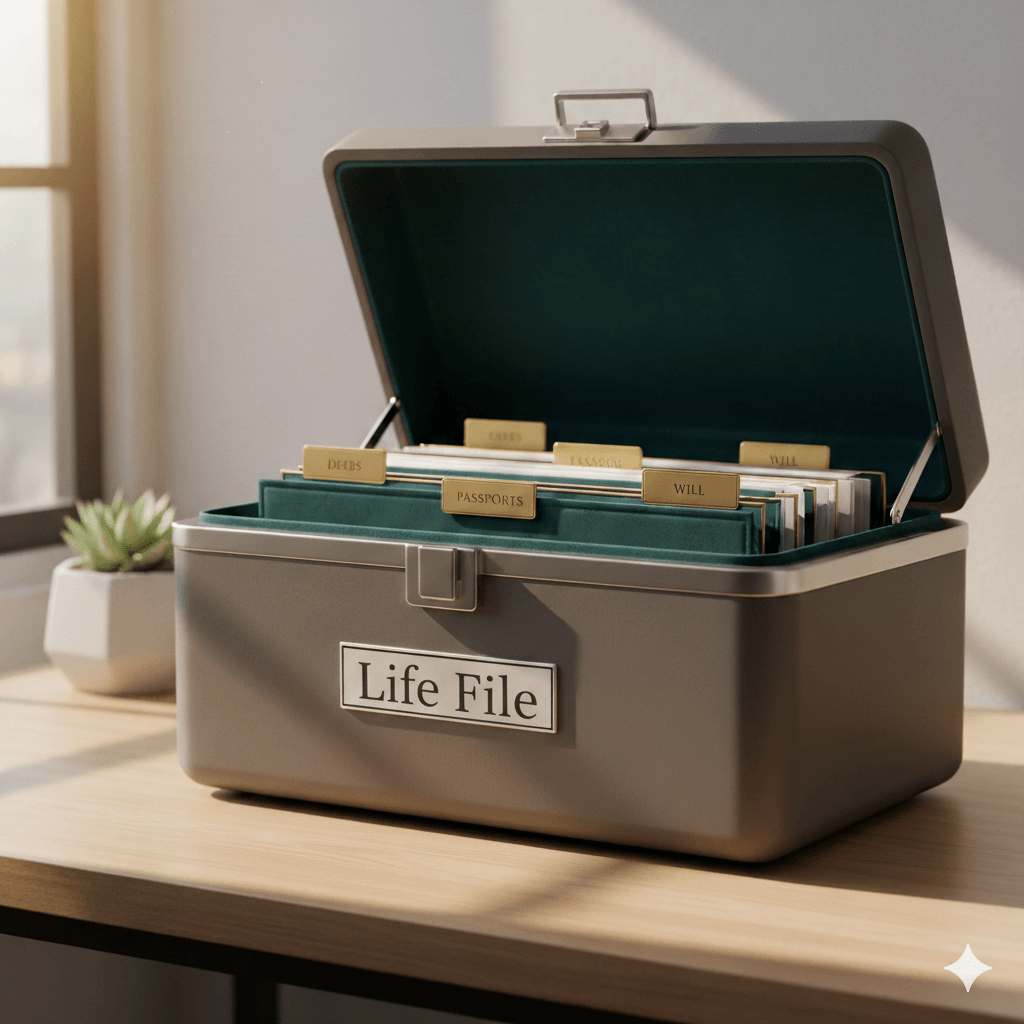
Alongside the digital LIFE File, he created a physical LIFE file. This was a sturdy, well-organised binder containing hard copies of his most critical documents: his original will, property deeds, birth and marriage certificates and copies of his insurance policies. The originals, particularly precious ones, were placed in a secure, fireproof and waterproof box kept in his safe. He made a point of regularly reviewing and updating both the digital and physical files, to keep everything up-to-date.
An organised life, an organised legacy
When Arthur eventually passed, peacefully in his sleep, the grief was profound. But amidst their sorrow, my cousins, Emily and Thomas found an unexpected solace in the organised clarity their father had left them. There was no frantic search for documents, no guessing at his wishes, no prolonged bureaucratic struggle.
Emily accessed the Digital LIFE File the day after he passed. She found his funeral instructions, allowing them to honour his wishes without additional stress. Thomas used the financial details to notify banks and pension providers, initiating the necessary processes with ease. The clear instructions for accessing the will and his solicitor meant probate could begin promptly.
The checklist Arthur had included in his LIFE file was a godsend:
“1. Contact Solicitor.
2. Notify Bank XYZ.
3. Call Insurance.
4. Access safe for originals…”
It guided them step-by-step through what would otherwise have been an overwhelming and emotionally draining ordeal.
A testament to love
Arthur’s LIFE file was more than just a collection of documents; it was a profound testament to his love for his family. It allowed them to grieve without the added burden of administrative chaos. It was his final, thoughtful act, a quiet assurance that even in death, he was still caring for them.
It freed Emily and Thomas to focus on remembering their father, celebrating his life and finding comfort in each other, rather than being consumed by the logistics of his passing.
For anyone facing the inevitable, or simply wishing to prepare for it, a LIFE file is not just a practical tool, but the ultimate gift of peace, a promise of an unburdened departure for both those who leave and those who remain.

An organised Life - an organised legacy - the LIFE file
A well-planned Digital LIFE file is not just an act of kindness for your future beneficiaries—it’s an act of self-care that immediately brings order, security, and peace to your life today.

Gary
Gary is a life-long learner and avid neuroscience nerd. He works as a coach to organisations, groups, and individuals. He supports mental health training and care. A strategic thinker with an operational career - he knows how to structure and organise an intentional life. After losing family members and friends - he understands not just the pain of losing a loved one, but the pain of an unorganised legacy.
Follow me